
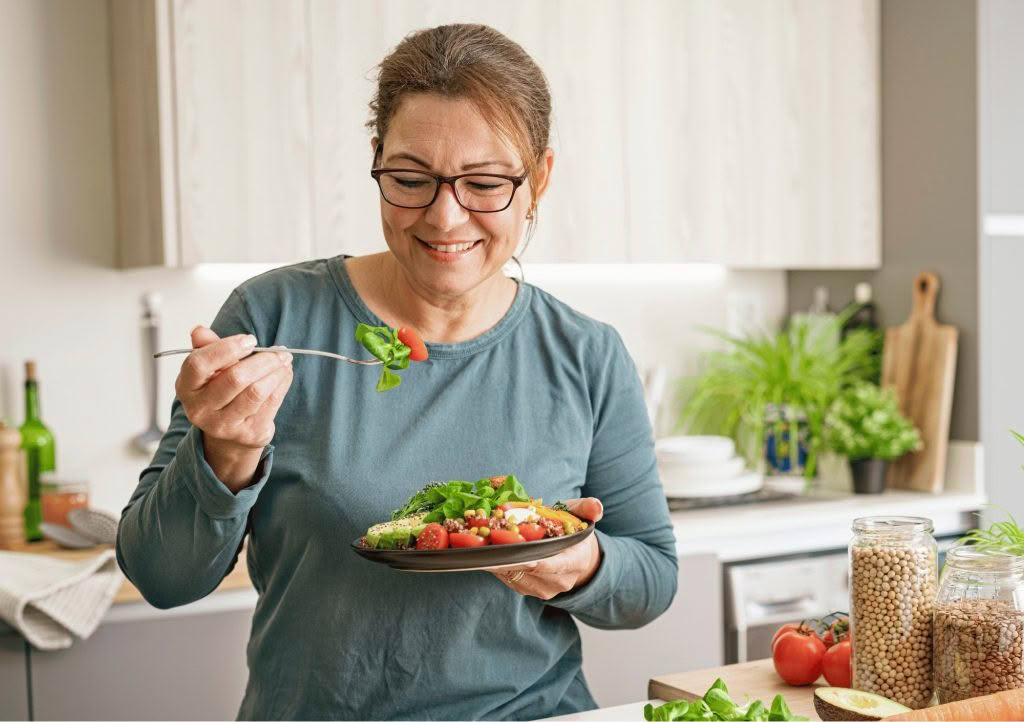
When you think about “healthy eating”, what comes to mind?
Perhaps salads, vegetables, carefully planned meals and avoiding anything you consider “bad” or “unhealthy”.
Maybe you’ve tried to eat perfectly in the past — only to find that it became difficult to maintain. You followed the rules for a while, then had a treat, missed a meal or ate something you hadn’t planned to eat.
And before you knew it, you were thinking, “Well, I’ve ruined it now, so I may as well start again on Monday.”
But what if healthy eating doesn’t have to mean eating perfectly?
Healthy eating isn’t about being “good”
One of the biggest problems with dieting is the idea that foods are either “good” or “bad” — and that you are either being “good” or “bad” depending on what you eat. This can create an unhealthy cycle.
You restrict the foods you enjoy. You feel deprived. Eventually, you eat them — perhaps more than you intended — and then feel guilty about it. The guilt can lead to more restrictive thinking, which makes the foods you’ve been trying to avoid even more tempting.
Healthy eating habits are much more flexible than that.
It’s about what you do most of the time
A healthy approach to eating doesn’t require you to make the perfect choice every time you eat. It’s about what you do most of the time.
You can enjoy a meal out with friends. You can have a piece of cake at a birthday celebration. You can enjoy your favourite foods without deciding that you have “failed”. The important question isn’t “Was that the perfect choice?”
It’s “What choice would support me now?”
That small change in thinking can make a surprisingly big difference.
Healthy habits can be simple
- Healthy eating doesn’t have to involve complicated meal plans, counting calories or points, or spending hours preparing food.
- It can mean noticing when you’re actually hungry rather than automatically eating because it’s lunchtime.
- It can mean slowing down and paying attention to what you’re eating.
- It can mean recognising when you’ve had enough, rather than continuing simply because there’s food left on your plate.
And it can mean becoming more aware of the situations that trigger unnecessary eating — such as boredom, stress, tiredness or simply having certain foods readily available.
These are the everyday habits that can make a real difference over time.
Give yourself permission to be human
One of the most important healthy habits you can develop has nothing to do with food. It’s learning to stop turning one less-than-ideal choice into an entire day, weekend or week of overeating. You don’t need to “start again Monday”.
Your next choice is simply your next opportunity to make a choice that supports you. This is where mindset becomes so important.
Rather than constantly relying on willpower or following a strict list of rules, you can learn to understand your own eating patterns and develop habits that fit your life.
Healthy eating should support your life – not take it over
The goal isn’t to spend the rest of your life dieting. It’s to develop a healthier, more relaxed relationship with food – one where you can enjoy what you eat while becoming more aware of your body’s needs, your habits and your choices.
Healthy eating isn’t about perfection. It’s about consistency, flexibility and making choices that support you most of the time.
And when healthy habits become part of your normal way of living, you no longer have to rely on constantly “being on a diet”. That’s when weight management can become something you live, rather than something you are continually trying to achieve.
Want to explore this topic further?
If you’d like to learn more about the thoughts, habits and patterns that can influence eating, you can find out more about my Healthy Mind-Body Programmes below.
Ready to explore your options?